
Skip learning this now and the first time you'll figure it out is during a power outage in the middle of a storm, with the car trapped inside and rain coming sideways. Another season of not knowing what that little red cord does, or worse, yanking it without understanding why, usually ends one of two ways: a door that won't budge even after you've disconnected it, or a door that comes down faster and harder than you expected. Neither is a good surprise when you're already dealing with wind and water.
What the Emergency Release Cord Actually Does
The cord hangs from a mechanism on the trolley that rides along the opener's rail, usually ending in a red handle. Pulling it disconnects the door from the opener's drive system entirely, so the door is no longer motorized. At that point the door operates purely on its springs and your own muscle. It's built into every residential opener for one reason: so you can manually open or close the door if the opener fails, loses power, or needs to be bypassed for a repair.
That's the whole function. It's not a reset button, it's not a maintenance step, and it's not something to pull just because the door is being slow or noisy. It's a mechanical disconnect, full stop.
What Goes Wrong When It's Pulled at the Wrong Time
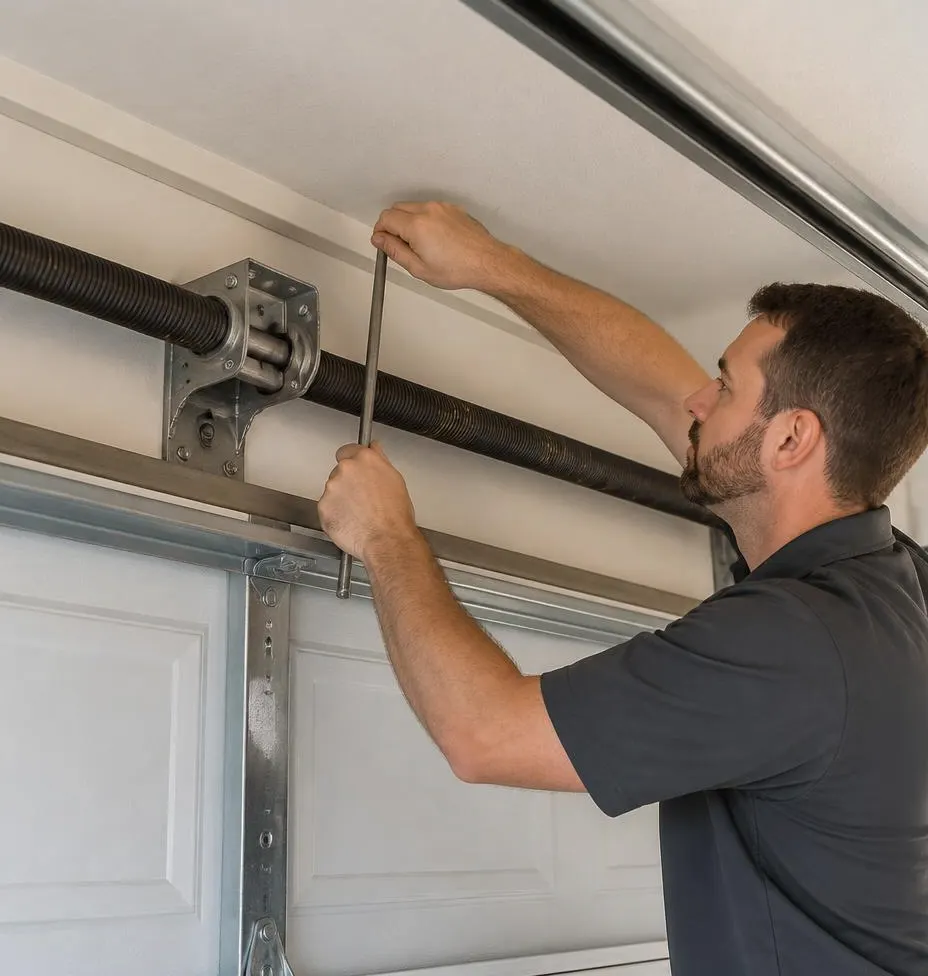
The release cord assumes the springs are doing their job correctly. When they are, a disconnected door stays roughly where you leave it and lifts with moderate effort. When they're not, pulling that cord turns a stationary door into a fast-moving weight with nothing holding it back.
- Broken or weakened spring: If a spring has already snapped or lost tension, a door in the up position can slam down the moment it's released. A door of that weight falling the last several feet can crack a frame, damage a vehicle roof, or injure anyone standing underneath.
- Off-track rollers: If the door has already jumped its track, a release cord pull doesn't fix that. It just frees a misaligned panel to swing or bind unpredictably as you try to move it by hand.
- Rusted or swollen hardware: Coastal humidity and salt air corrode springs, hinges, and track bolts faster than it happens inland. A spring that's been quietly rusting can fail at full tension right when the door is being hand-operated, with no opener motor to cushion the movement.
- Reconnecting incorrectly: Pull the cord, then later shove the trolley back onto the rail without lining it up properly, and the opener can struggle to catch the door, slip under load, or drive the door against the frame.
None of this is rare. It's one of the more common ways a routine repair call turns into an injury report, especially in households where someone pulls the cord to "see what's wrong" without knowing the spring's condition first.
When You Should Pull It
There are a handful of legitimate reasons to use the release, and all of them share one thing in common: you need manual control of the door right now.
- Power outage during storm season: If you need to get a vehicle in or out before conditions worsen and the opener has no power, the release lets you lift the door by hand.
- Opener malfunction with the door stuck shut: If the motor is running but the door isn't moving, and you need access, disconnecting it lets you check whether the door itself will move freely by hand.
- Before working on the opener or trolley: Anyone doing opener maintenance should disconnect the door first so the motor isn't fighting against it.
In every one of these cases, before pulling the cord, give the door a visual check first if you can. Look for a sagging cable, a gap in a spring coil, or a roller sitting outside its track. If you see any of those, don't pull the release and try to lift by hand — that's exactly the scenario where an unbalanced door becomes dangerous.
When Pulling It Makes Things Worse
Avoid the release cord in these situations:
- The door won't open and you can see a broken spring or a cable hanging loose. Disconnecting the opener removes the one thing that might still be partially supporting the door's weight.
- The door is already off track. Manual movement on a misaligned door risks bending the track further or dropping a panel.
- You're not planning to be present the entire time the door is manually operated. A disconnected door left in the open position with no opener engaged can drift or fall if bumped.
Specific Actions That Prevent the Bad Outcomes
- Test the balance twice a year. Disconnect the opener with the door closed, then lift it by hand. It should rise smoothly and hold at roughly waist height on its own. If it drops or shoots up, the springs are out of adjustment and need attention before you ever rely on manual operation.
- Inspect springs and cables before storm season and again mid-season. Coastal salt air speeds up corrosion, and a spring that looked fine in spring can be compromised by late summer.
- Know where the release handle is and how to reconnect it before you need it in an outage, not during one, with a flashlight in your teeth.
- Keep the area under the door clear any time it's manually operated, including pets and parked vehicles.
When to Call Fort Myers Beach Garage Door Experts
If your door doesn't hold steady when disconnected, drops unevenly, or you've noticed rust forming on the springs or track hardware, that's not a do-it-yourself fix. Our Garage Door Spring Repair service replaces or rebalances worn springs before they fail during a manual lift, and our Garage Door Maintenance & Tune-Up visits check cables, rollers, and hardware for the kind of coastal wear that isn't always visible from the ground. We'll also walk you through using the release cord safely for your specific door and opener setup.
If you're in Fort Myers Beach, Fort Myers, Cape Coral, Estero, Bonita Springs, Sanibel, Lehigh Acres, or Naples and want your door checked before the next storm or power blip catches you off guard, call Fort Myers Beach Garage Door Experts today.