
Skip this for another season and here's what usually happens: a spring that was already fatigued from summer humidity finally lets go on a Saturday morning, right when you're loading the car for a trip off the island. Or a bottom roller that's been grinding against a salt-crusted track for months finally jumps, and the door comes off at an angle. Neither failure shows up overnight. Both start as small, ignorable things that a twenty-minute check would have caught. The repair bill for a snapped spring or a bent track is a lot higher than the cost of a Saturday morning with a flashlight.
Here's a routine built for houses near the coast, where salt air speeds up corrosion and summer's humidity and downpours leave their mark on hardware even after the rain stops.
Tools You'll Need
- Work gloves
- Flashlight
- Socket wrench or nut driver set
- Lithium-based garage door lubricant (not household oil or WD-40 as a long-term fix)
- A soft rag
- A 2x4 or similar board (for the safety reversal test)
The Twenty-Minute Checklist
- Walk the tracks with a flashlight. Look for rust spots, white salt residue, dents, or gaps where the track has pulled away from the wall. Coastal air leaves a fine film on metal that regular rain doesn't fully rinse off — wipe it down with a dry rag before it etches into the surface.
- Check every visible bolt and bracket. Vibration from regular opening and closing loosens hardware over time, and salt-air corrosion can make bolts seize or weaken faster than inland homes see. Snug up anything that's loose, but don't force a bolt that's rusted in place — that's a sign it needs replacing, not tightening.
- Inspect rollers and hinges for wear. Look for cracked nylon rollers, flat spots, or visible rust on the shafts. A quick wipe-down and a light coat of lubricant on hinges and roller stems keeps them moving smoothly through humid months.
- Check the weatherstripping along the bottom and sides. Afternoon downpours find any gap. Press on the seal — if it's brittle, cracked, or compressed flat, water and bugs are getting a way in. Weatherstripping is inexpensive and one of the easiest DIY swaps on this list.
- Clean the photo-eye sensors near the floor. Wipe each lens with a soft cloth. Salt haze, dust, and spiderwebs are the most common reason a door refuses to close for no obvious reason.
- Run the auto-reverse safety test. Lay the board flat on the ground where the door closes. Close the door — it should reverse immediately on contact. If it doesn't reverse, or reverses sluggishly, stop using the opener until it's addressed.
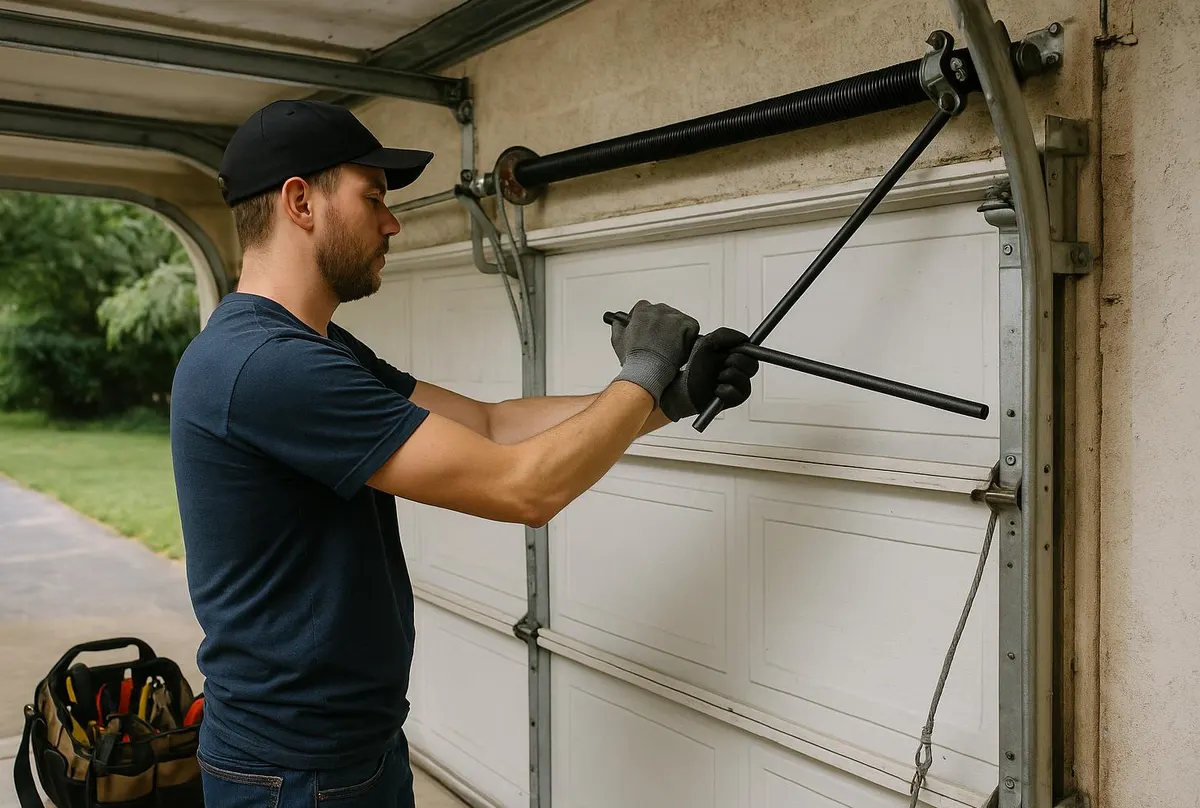
- Look at the springs — but don't touch them. Check for visible rust, gaps between coils, or a spring that looks stretched compared to its mate. This is strictly a visual check.
Where DIY Ends
Everything above is safe for a homeowner to do with basic tools. What's not on that list: adjusting spring tension, realigning a track that's pulled out of position, replacing frayed cables, or resetting opener force settings. Torsion springs are under enough tension to cause serious injury, and a track that's slightly out of alignment can get worse fast if someone tries to bend it back by hand. If your visual check turns up rust on the springs, a cable that looks frayed or has visible wire strands poking out, or a track that's visibly bent, that's where the checklist stops and a call starts.
When to Call Fort Myers Beach Garage Door Experts
If your seasonal check turns up worn rollers, stretched cables, or a door that's not reversing properly on the safety test, it's time to bring in a technician. Our Garage Door Maintenance & Tune-Up service covers a full inspection, spring tension check, hardware torque, and track alignment — the parts of this routine that need the right tools and training. If rollers or cables are showing real wear, our Cable & Roller Replacement service gets those swapped before they fail mid-cycle.
Twenty minutes now beats a stuck door later. Call Fort Myers Beach Garage Door Experts to schedule your seasonal tune-up before the next round of coastal weather puts it to the test.